ABB SF810INT-LOS-IR-TL-L-C-W Infrared Flame Scanner: Complete Technical Guide
Introduction
The ABB SF810INT-LOS-IR-TL-L-C-W is an integrated line-of-sight (LOS) infrared flame detection probe engineered for demanding industrial combustion monitoring applications. As part of ABB‘s Uvisor™ SF810i series, this intelligent flame scanner combines optical sensing, onboard signal processing, and output relaying in a single rugged housing—eliminating the need for separate external amplifiers or processors.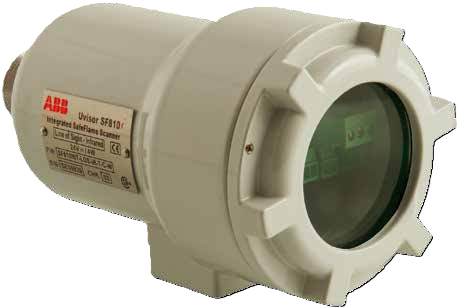
Designed for multi-fuel combustion environments including utility and industrial boilers, the SF810INT delivers absolutely reliable flame presence/absence information while continuously monitoring flame quality to provide additional operating intelligence to plant personnel.
Model Number Breakdown
Understanding ABB‘s nomenclature is essential for proper specification and compatibility:
The TL suffix is particularly significant—it denotes terminal-equipped versions with removable, screw-type terminals that accept cable sections from AWG24-AWG12 (0.2–2.5mm²) for relay contacts and AWG28-AWG16 (0.08–1.5mm²) for other connections. This provides maximum flexibility for field wiring and maintenance.
Key Technical Specifications
Core Technology & Advantages
Integrated Architecture
Traditional flame detection systems required separate scanners and external analysis units (such as MFD or FAU800 processors). The SF810INT eliminates this complexity by integrating all signal processing electronics directly inside the probe housing. This delivers direct 4–20 mA and relay output signals to PLC, DCS, or Burner Management Systems (BMS), reducing cabling costs, minimizing signal degradation, and simplifying overall system architecture.
Intelligent Flicker Frequency Recognition
The SF810INT doesn‘t merely measure light intensity—it analyzes the characteristic flicker frequency of combustion flames using ABB’s advanced signal processing algorithms. This intelligent approach distinguishes genuine flames from hot refractory background radiation, virtually eliminating false alarms that plague simpler threshold-based detectors.
Multi-Fuel Versatility
The scanner supports a wide range of fuels including natural gas, coke oven gas, light and heavy fuel oils, pulverized coal, Orimulsion, and sulphur gas. This flexibility makes it ideal for utility and industrial boilers with varying fuel compositions and changing operational requirements.
Robust Environmental Protection
With IP66/IP67 ingress protection and ATEX II 2GD Ex d IIC T6 explosion-proof certification, the SF810INT-LOS-IR-TL-L-C-W withstands harsh conditions including high temperatures, dust, vibration, and electromagnetic interference. The C-W suffix confirms conformal coating on internal electronics for moisture and chemical resistance, plus weatherproof housing suitable for outdoor or humid installations.
Terminal Version Advantages
The TL (removable screw terminal) configuration offers several practical benefits:
Simplified field wiring—no special connectors or crimping tools required
Easy maintenance—terminals can be accessed and serviced without replacing entire cable assemblies
Flexible cable selection—accepts a wide range of conductor sizes
Cost-effective—reduces dependency on proprietary connector systems
Applications
The SF810INT-LOS-IR-TL-L-C-W is deployed across multiple demanding industrial sectors:
Power Generation: Coal-fired boiler main burner monitoring in utility and industrial boilers; wall-fired, corner-fired, down-shot, and cyclone burner types
Petrochemical & Refining: Furnace and cracker heater flame surveillance; sulfur recovery units and flare stack monitoring
Waste-to-Energy: Rapid flame-out response for variable-fuel incineration systems
Steel & Metals: Blast furnace gas (BFG) boilers and high-temperature heating furnaces
Cement & Pulp/Paper: Process heater combustion verification; alkali recovery boilers
Installation & Maintenance Considerations
Lens Cleaning Air Supply
Clean, dry instrument air must be supplied for continuous lens purging. For LOS (Line of Sight) versions, the recommended airflow is 115 l/min (4 SCFM). Environments with excessive contaminants may require flow rates up to 400 l/min (14 SCFM). The minimum cleaning air pressure must be 20mm H₂O above the maximum wind box pressure measured at the “Y” connection inlet.
This airflow serves two critical purposes:
Creates a positive pressure curtain preventing soot and particulate buildup on the lens
Provides cooling for internal electronics in high-temperature environments
Alignment Optimization
For optimal performance, the probe axis should target the most stable region of the flame root—typically the ignition zone where the flame is most consistent. Proper line-of-sight alignment with the flame center is critical. The probe should be positioned to directly observe the ignition zone while avoiding:
Adjacent flame interference (“flame stealing” or cross-talk)
Background thermal radiation from refractory walls
Electrical Integration
The TL terminal version provides straightforward field connections:
4–20 mA analog output (galvanically isolated, load ≤ 500Ω) for flame intensity monitoring
Flame relay (1 NO contact, 240 VAC/1.5A capacity) for BMS safety interlock
Dual redundant RS-485 ports configurable for Modbus RTU or Profibus DP communication
Two digital inputs (24 VDC, 5mA) for selecting from 4 different configuration parameter sets
Local Configuration
The SF810INT features a built-in local interface with:
4 pushbuttons (UP, DOWN, LEFT, RIGHT) for on-site configuration
3-digit LED display for real-time status indication and parameter feedback
Field-configurable parameters include serial communication protocol selection, flame algorithm basic parameters, flame failure response time, and flame-on delay time.
Maintenance Best Practices
During boiler overhauls, the probe should be removed and the optical window gently cleaned using anhydrous ethanol to maintain optical clarity. Regular inspection of the TL screw terminals for tightness is recommended, as vibration can gradually loosen connections over time.
Why Choose the SF810INT-LOS-IR-TL-L-C-W?
Simplified System Architecture – No external processors or amplifiers required
Superior False Alarm Rejection – Flicker frequency analysis distinguishes flame from background radiation
Multi-Fuel Capability – Single scanner handles gas, oil, coal, and alternative fuels
Harsh Environment Ready – ATEX certified with IP66/IP67 protection
Field-Friendly Termination – TL removable screw terminals simplify wiring and maintenance
Seamless Integration – Direct PLC/DCS connectivity with Modbus/Profibus support
Proven Reliability – Backed by ABB‘s decades of combustion safety expertise
Conclusion
The ABB SF810INT-LOS-IR-TL-L-C-W represents a significant advancement in industrial flame detection technology. By integrating infrared sensing, intelligent signal processing, and robust environmental protection into a single ATEX-certified housing with field-friendly screw terminal connectivity, it delivers the reliability and performance that modern burner management systems demand.
Whether for new greenfield installations or upgrading aging flame detection infrastructure, this scanner provides a cost-effective path to enhanced combustion safety, operational efficiency, and regulatory compliance.